



The kidneys do their most important work invisibly — filtering waste, regulating fluid, and maintaining the delicate chemical balance that every other organ depends upon. Damage to them rarely announces itself with clear symptoms until it is well advanced, which is precisely why a single blood test result, the estimated glomerular filtration rate or eGFR, has become such a valuable clinical tool. Understanding what this number means, how it is calculated, and what influences its accuracy is useful both for those who have been given a result and for those who wish to monitor their kidney health proactively.
What Is GFR?
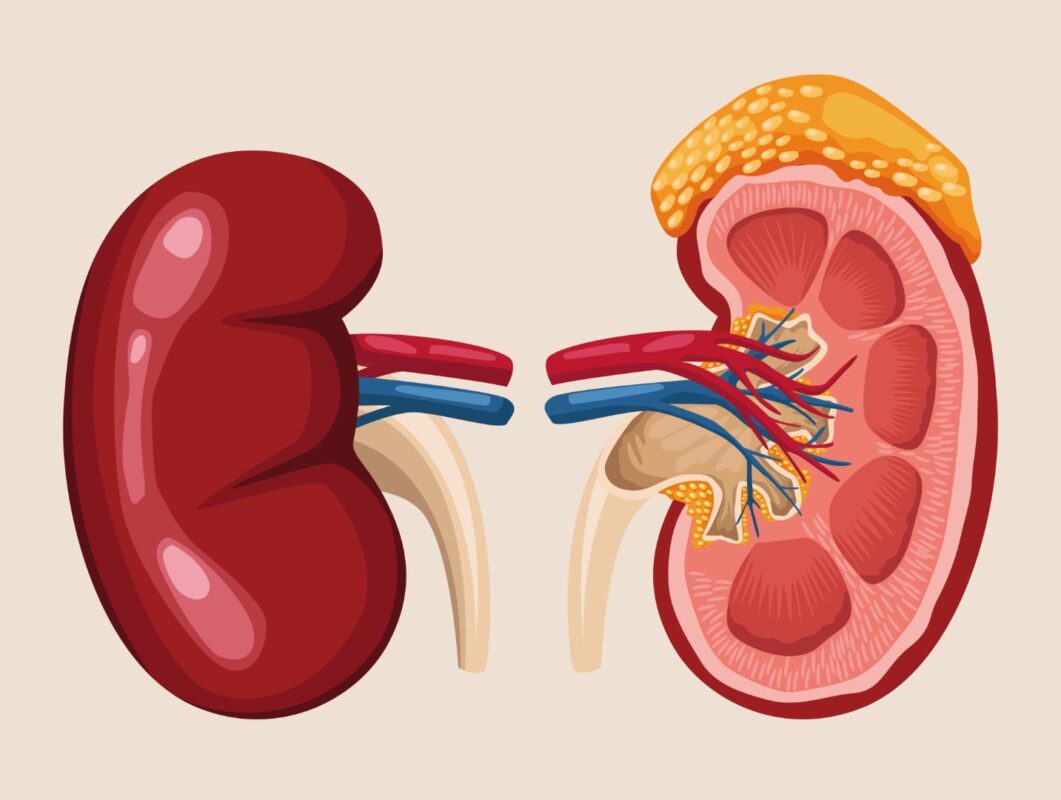
The glomerular filtration rate (GFR) is a measure of how efficiently the kidneys are filtering blood. Within each kidney are approximately one million tiny filtering units called glomeruli. Together, they process a remarkable volume of blood — roughly 180 litres every day — removing waste products and excess fluid while retaining what the body needs. GFR quantifies this process: it estimates how many millilitres of blood are being filtered per minute per 1.73 square metres of body surface area.
A GFR of 90 or above is generally considered normal. Values between 60 and 89 may indicate mildly reduced function and warrant monitoring, while a persistent GFR below 60 — confirmed on at least two occasions separated by at least three months — meets the diagnostic threshold for chronic kidney disease (CKD). The lower the GFR, the more significantly kidney function is impaired. At a GFR below 15, the kidneys are functioning at less than a sixth of their normal capacity, and dialysis or transplantation becomes a clinical consideration.
Why GFR Measurement Matters
Kidney disease is frequently described as a silent condition, and the description is apt. In its early and middle stages, it produces few if any symptoms — the kidneys have considerable reserve capacity, and the body compensates effectively until damage is substantial. By the time symptoms such as ankle swelling, persistent fatigue, or changes in urination become apparent, meaningful function may already have been lost. GFR testing offers the opportunity to identify impairment before this point, when intervention is most effective.
For those already living with a diagnosis of chronic kidney disease, serial GFR measurements provide a clear picture of whether the condition is stable, progressing slowly, or deteriorating at a rate that requires more active management. The staging of CKD is determined entirely by GFR values, which directly influences decisions about medication dosing, dietary guidance, referral to specialist nephrology services, and preparation for renal replacement therapy. It is a number that carries genuine clinical weight.
How GFR Is Estimated
True GFR measurement requires controlled infusion of a filtration marker and timed urine collections — a process too complex for routine clinical use. In everyday practice, GFR is estimated from blood tests using validated equations, and is reported as estimated GFR, or eGFR. Two blood markers are in current clinical use, each with distinct characteristics.
Serum Creatinine
Creatinine is a waste product generated continuously by muscle metabolism, cleared from the body almost entirely by the kidneys through filtration. When kidney function declines, creatinine accumulates in the blood, and the eGFR derived from its concentration falls accordingly. Creatinine testing is inexpensive, widely available, and extensively validated; it is the starting point for kidney assessment in the great majority of clinical settings.
Its principal limitation is its dependence on muscle mass. Because creatinine production is directly related to the amount of muscle a person carries, the same serum creatinine level tells a different story in a lean elderly woman than it does in a competitive bodybuilder. In individuals with very high muscle mass, creatinine may be elevated not because the kidneys are filtering poorly but simply because the muscles are producing more of it — giving an eGFR that is falsely low. In those with very little muscle, the opposite can occur: creatinine remains deceptively low even as kidney function declines, producing a falsely reassuring eGFR. Neither result should be taken in isolation when body composition is unusual.
Cystatin C
Cystatin C is a small protein produced at a constant rate by virtually all nucleated cells in the body, independently of muscle mass, age, sex, or diet. It is filtered by the kidneys and almost entirely reabsorbed and broken down there, making it a sensitive and specific marker of glomerular filtration. Unlike creatinine, its production is not meaningfully altered by exercise, dietary protein intake, or changes in body composition, which makes it considerably more reliable in populations where creatinine-based estimates are known to be misleading.
Its practical limitation is availability. Cystatin C testing is more expensive than creatinine and is not universally offered in all healthcare settings. It is most commonly requested where creatinine results appear inconsistent with the clinical picture, or where the patient’s body composition is known to affect creatinine-based estimates.
Comparing the Two Markers
| Feature | Serum Creatinine | Cystatin C |
| Source | Muscle metabolism | All nucleated cells (constant rate) |
| Affected by muscle mass? | Yes — significantly | No |
| Affected by age, sex, or diet? | Partially | Minimally |
| Availability | Widely available; standard first-line test | Less commonly ordered; specialist settings |
| Cost | Inexpensive | Higher cost |
| Best suited to | General population screening | Muscular individuals, frail elderly, or unclear creatinine results |
| Combined equation available? | Yes — creatinine + cystatin C improves accuracy | Yes — recommended where both are measured |
Special Considerations: Athletes and High Muscle Mass
For athletes, bodybuilders, and individuals with naturally high muscle mass, creatinine-based eGFR requires careful interpretation. Their elevated baseline creatinine is a reflection of muscle turnover, not of impaired kidney function, and the resulting eGFR may fall into a range that incorrectly suggests kidney disease. This is sometimes described as a ‘false low’ and can cause unnecessary concern if the result is not contextualised properly.
In these individuals, cystatin C provides a more accurate picture of true kidney function precisely because it is unaffected by muscle size. Where there is any doubt, a combined equation using both creatinine and cystatin C is the most reliable approach. A clinician who is aware of the patient’s athletic background and body composition is well placed to request the appropriate test and interpret the result accordingly. The key message for this group is not to accept a low creatinine-based eGFR at face value without further investigation.
GFR Values and What They Indicate
| eGFR (mL/min/1.73m²) | Stage | Clinical Interpretation |
| ≥90 | Normal or high | Kidney function is normal or above average; monitor if risk factors are present |
| 60–89 | Mildly reduced | May be normal for older adults; worth monitoring with annual review |
| 45–59 | Mildly to moderately reduced | CKD Stage 3a; regular monitoring and cardiovascular risk management |
| 30–44 | Moderately to severely reduced | CKD Stage 3b; nephrology involvement may be appropriate |
| 15–29 | Severely reduced | CKD Stage 4; preparation for renal replacement therapy begins |
| <15 | Kidney failure | CKD Stage 5; dialysis or transplantation usually required |
It is important to note that a single low eGFR result does not confirm chronic kidney disease. The diagnosis requires two readings below the threshold, taken at least three months apart, to exclude transient causes such as dehydration, acute illness, or medication effects. A clinician will always consider the result in the broader context of the patient’s history and symptoms.
Managing Reduced Kidney Function
A diagnosis of chronic kidney disease is not, for most people, a trajectory that leads inevitably to dialysis. For the majority, it is a condition that can be effectively managed and stabilised, with the goal of slowing or halting further decline rather than restoring lost function. The most impactful interventions address the conditions most commonly responsible for kidney damage in the first place.
Blood pressure control is the single most important modifiable factor: hypertension damages the delicate blood vessels within the glomeruli, and maintaining consistently normal pressures significantly slows the rate of GFR decline. For those with diabetes — the other leading cause of CKD — meticulous blood glucose management is equally critical. Certain classes of medication, notably SGLT-2 inhibitors and ACE inhibitors or ARBs, have demonstrated specific kidney-protective effects beyond their primary indications and may be recommended even in the early stages of CKD. Non-steroidal anti-inflammatory drugs (NSAIDs) such as ibuprofen and diclofenac, by contrast, reduce blood flow to the kidneys and should be avoided or used with great caution in anyone with impaired renal function.
Dietary adjustments — moderating protein intake, limiting potassium and phosphate in advanced disease, and reducing sodium — may be advised as kidney function declines further. Smoking cessation and weight management reduce cardiovascular risk, which is substantially elevated in CKD. In advanced cases where GFR falls towards 15, planning for dialysis or transplantation begins well in advance, so that the transition can be managed thoughtfully rather than reactively.
Protecting Kidney Health: Preventive Measures
For individuals without kidney disease, the preventive steps that benefit the kidneys are largely the same as those that support cardiovascular and metabolic health more broadly. Adequate hydration supports filtration and reduces the risk of kidney stones. A diet rich in vegetables, whole grains, and lean protein, with limited salt and processed food, reduces the burden on the kidneys over time. Blood pressure and blood glucose should be monitored regularly, particularly in those with a family history of kidney disease, hypertension, or diabetes.
Medications deserve particular attention. NSAIDs, when used repeatedly or at high doses, are a meaningful cause of kidney injury, and their use should be discussed with a clinician in anyone with pre-existing kidney concerns. Unregulated supplements and herbal preparations carry a less well-known but real risk of nephrotoxicity and should be approached with similar caution. Alcohol in excess and smoking both compromise kidney health through their effects on blood pressure and vascular integrity. Regular health screenings — including a kidney function check every one to three years for most adults, or annually for those with risk factors — allow early changes to be identified and acted upon before they become significant.
Frequently Asked Questions
How often should I have my kidney function checked?
For most healthy adults without known risk factors, kidney function is reasonably checked as part of routine health screening every one to three years. Those with diabetes, hypertension, a family history of kidney disease, or other established risk factors are typically advised to have annual testing. If a previous result has shown reduced function, your clinician will recommend a monitoring interval appropriate to your specific situation.
My eGFR result was low — does this mean I have kidney disease?
Not necessarily. A single low eGFR result requires careful interpretation before any conclusion is drawn. Transient causes — dehydration, recent strenuous exercise, acute illness, or certain medications — can temporarily lower the result. A diagnosis of chronic kidney disease requires two readings below the threshold, at least three months apart. If you have high muscle mass, your creatinine-based eGFR may also be lower than your true kidney function would suggest. A conversation with a clinician, who can consider all of these factors together, is always the appropriate response to an unexpected result.
Which test is more appropriate for me — creatinine or cystatin C?
For most people, a creatinine-based eGFR is the appropriate starting point. It is widely available, reliable in the general population, and has a long track record in clinical use. Cystatin C is most useful when creatinine results are inconsistent with the clinical picture — particularly in athletes or bodybuilders with high muscle mass, in frail elderly individuals with very little muscle, or in anyone whose body composition makes creatinine a potentially misleading marker. A combined equation using both markers offers the greatest accuracy and may be recommended in these situations.
Can I improve my GFR once it has fallen?
In most cases, a reduced GFR reflects a degree of permanent structural change within the kidneys, and the primary goal of treatment is to slow or halt further decline rather than to reverse what has already occurred. That said, addressing the reversible factors — optimising blood pressure, managing blood sugar, stopping potentially harmful medications — can produce a meaningful and sustained improvement in eGFR in some patients, particularly where the initial decline was partly driven by these modifiable causes. The realistic aim for most people is stabilisation and protection of remaining function.
Does drinking more water raise my GFR?
Good hydration supports kidney health and is important for everyone, particularly in hot climates or during periods of high physical activity. However, drinking water beyond what good hydration requires does not improve GFR where kidney damage already exists. The kidneys regulate fluid balance with considerable sophistication; excessive water intake does not enhance filtration and can, in some circumstances, place unnecessary strain on the system. Balance and consistency matter more than volume.
At what point is dialysis necessary?
Dialysis is generally considered when eGFR falls below 15 mL/min/1.73m² and symptoms of uraemia — the accumulation of waste products in the blood — become apparent. Many people with a GFR in this range feel well enough that dialysis can be deferred for some time with careful monitoring. Planning for dialysis or transplantation typically begins earlier, at around a GFR of 20 to 30, so that the transition is prepared for rather than rushed. The decision is made collaboratively between patient and nephrologist, taking into account symptoms, rate of progression, and individual circumstances.
Are there symptoms I should watch for?
Early and moderate CKD is frequently asymptomatic, which is why regular testing is valuable even in the absence of symptoms. As function declines more substantially, individuals may notice ankle or facial swelling, persistent fatigue, reduced appetite, changes in the frequency or appearance of urine, difficulty concentrating, or high blood pressure that is increasingly difficult to control. These symptoms warrant prompt medical assessment. In the meantime, the most effective early warning system remains a routine blood test.
In Summary
The estimated glomerular filtration rate is one of the most informative — and most accessible — indicators of kidney health available in routine clinical practice. Interpreted with an understanding of its limitations, and in the context of the individual’s age, body composition, and medical history, it offers a reliable window into a system that is central to whole-body health. For those with established kidney disease, it guides management and helps calibrate the pace of intervention. For everyone else, it is a straightforward and worthwhile component of preventive care.
Whether you have received a result that prompts questions, or simply wish to understand your kidney health more clearly, a consultation with a qualified clinician ensures that findings are interpreted accurately and that any next steps are appropriately tailored to your individual circumstances.
References
Levey AS, Stevens LA, Schmid CH, et al. A new equation to estimate glomerular filtration rate. Ann Intern Med. 2009;150(9):604–612.
Inker LA, Astor BC, Fox CH, et al. KDOQI US commentary on the 2012 KDIGO clinical practice guideline for the evaluation and management of CKD. Am J Kidney Dis. 2014;63(5):713–735.
Kidney Disease: Improving Global Outcomes (KDIGO) CKD Work Group. KDIGO 2012 clinical practice guideline for the evaluation and management of chronic kidney disease. Kidney Int Suppl. 2013;3(1):1–150.
Inker LA, Eneanya ND, Coresh J, et al. New creatinine- and cystatin C–based equations to estimate GFR without race. N Engl J Med. 2021;385(19):1737–1749.
Shlipak MG, Matsushita K, Åsblom J, et al. Cystatin C versus creatinine in determining risk based on kidney function. N Engl J Med. 2013;369(10):932–943.
Go AS, Chertow GM, Fan D, McCulloch CE, Hsu C-Y. Chronic kidney disease and the risks of death, cardiovascular events, and hospitalization. N Engl J Med. 2004;351(13):1296–1305.
Wanner C, Inzucchi SE, Lachin JM, et al. Empagliflozin and progression of kidney disease in type 2 diabetes. N Engl J Med. 2016;375(4):323–334.
Coresh J, Selvin E, Stevens LA, et al. Prevalence of chronic kidney disease in the United States. JAMA. 2007;298(17):2038–2047.
Perrone RD, Madias NE, Levey AS. Serum creatinine as an index of renal function: new insights into old concepts. Clin Chem. 1992;38(10):1933–1953.
National Institute for Health and Care Excellence (NICE). Chronic kidney disease in adults: assessment and management. NICE guideline NG203. London: NICE, 2021.